Macular degeneration is a retinal condition primarily associated with age. There are two types: wet macular degeneration and dry macular degeneration. While it can lead to a loss of central vision, it is unlikely to cause complete vision loss. There are available treatments, but no complete cure.
What is macular degeneration?
Macular degeneration is an eye disease that primarily affects central vision, making it difficult to see objects directly in front of you. This common age-related condition most often occurs in people aged 50 and older.
How It Affects Vision
- Impacts the macula, the central part of the retina responsible for clear, central vision.
- Peripheral vision remains unaffected, so people with macular degeneration are not completely blind.
Does It Affect Both Eyes?
Yes, macular degeneration can develop in one eye or both eyes, and the severity may differ between them.
Prevalence of Macular Degeneration
- In the U.S., nearly 20 million adults are affected by macular degeneration.
- Globally, it’s predicted that 288 million people will have this condition by 2040.
- In the U.S., macular degeneration is one of the leading causes of vision loss among individuals 60 years and older.
Who Is at Risk for Macular Degeneration?
As its name suggests, age-related macular degeneration (AMD) is most commonly associated with aging. While the likelihood increases with age, macular degeneration can also occur at younger ages due to several factors.
Key Risk Factors for Macular Degeneration:
- Age: The risk significantly increases for individuals aged 50 and older.
- Family History: A genetic predisposition can raise the likelihood of developing the disease.
- Being Overweight: Obesity is linked to a higher risk of AMD.
- Smoking: Smokers have a notably higher chance of developing macular degeneration.
- High Blood Pressure (Hypertension): Poor vascular health can contribute to AMD progression.
- Diet: Consuming a diet high in saturated fats is associated with increased risk.
- Ethnicity: People of white ethnicity are more prone to macular degeneration compared to other groups.
Understanding these risk factors can help in taking preventative steps, such as maintaining a healthy lifestyle, not smoking, and regularly consulting with an eye care provider.
Types of Macular Degeneration
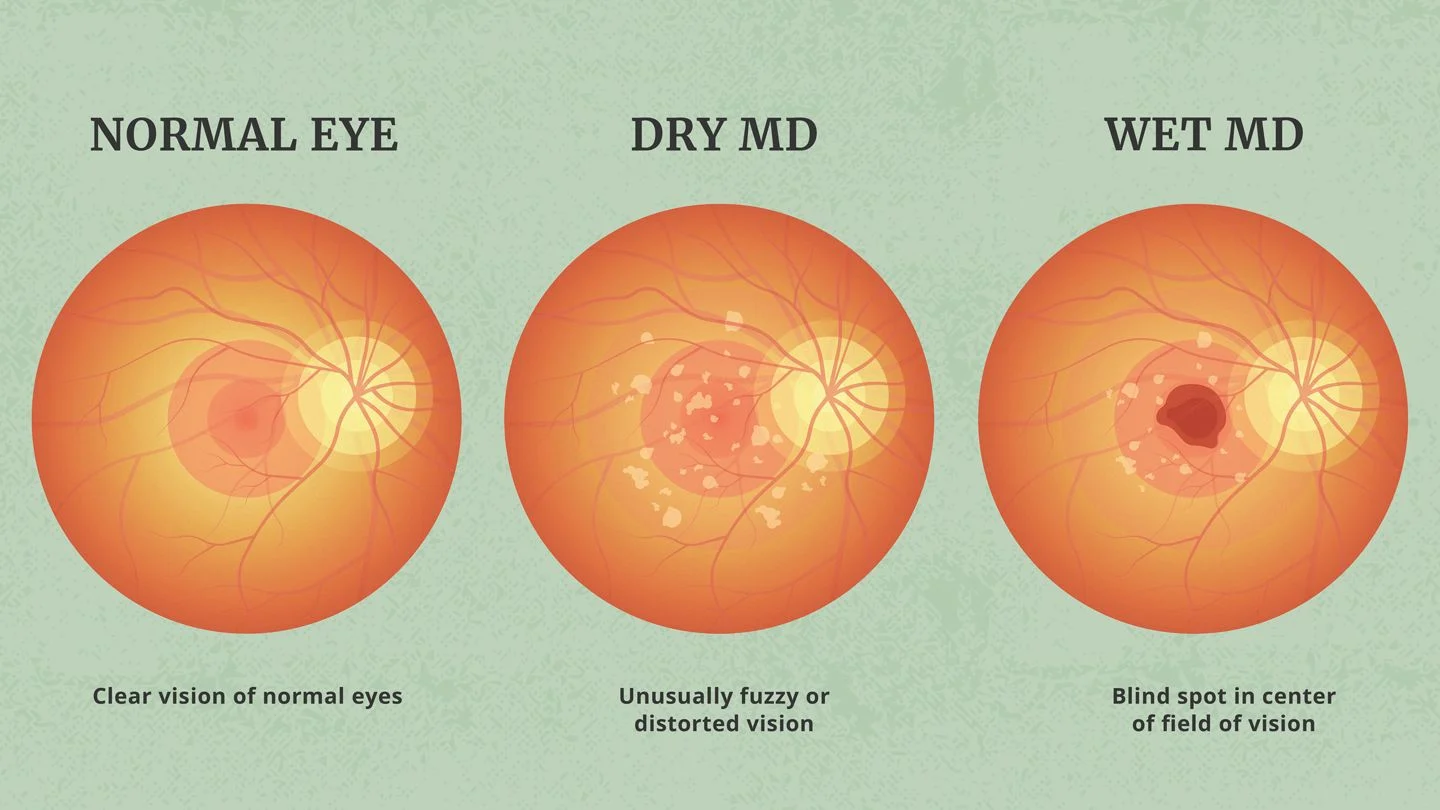
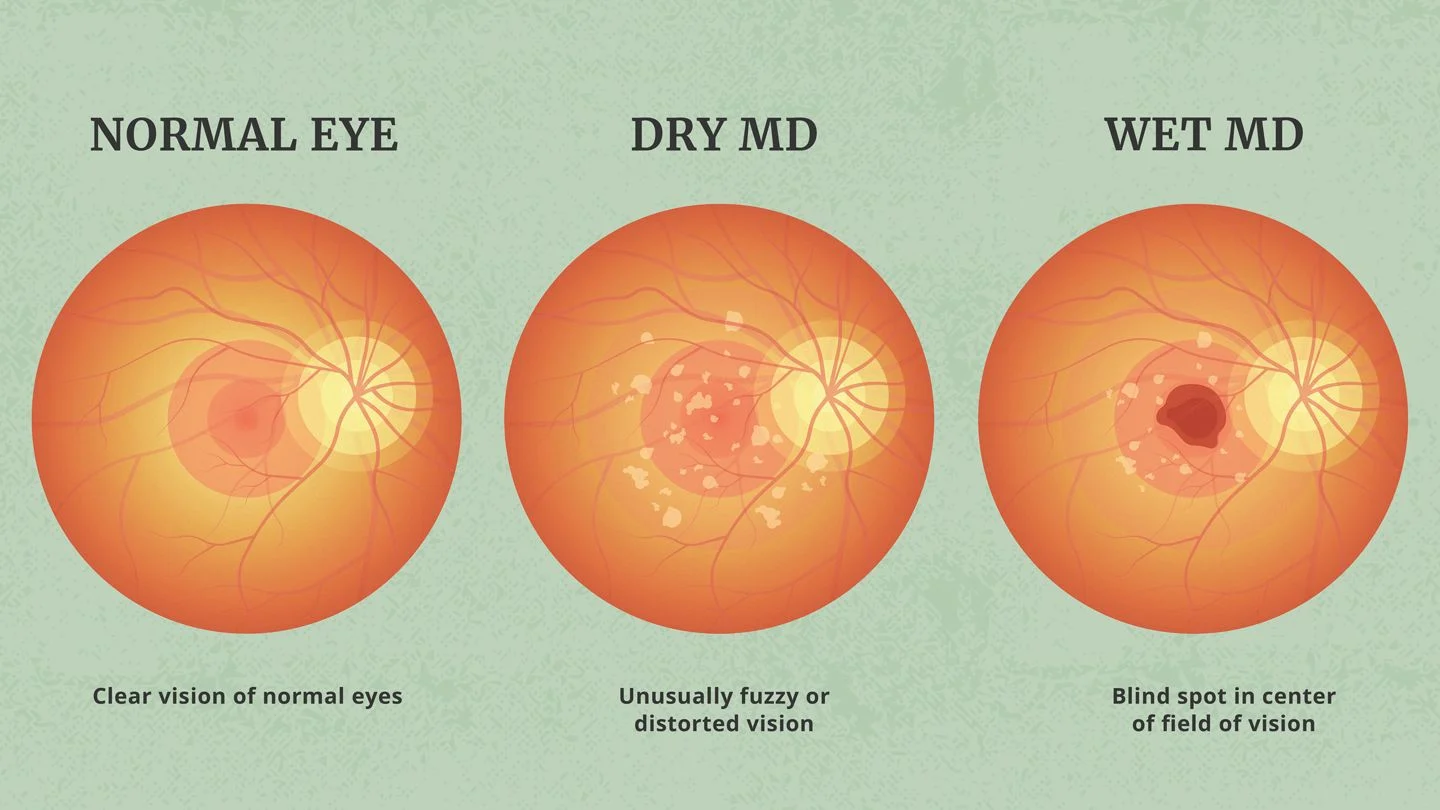
Macular degeneration is classified into two main types: dry and wet.
1. Dry (Atrophic) Macular Degeneration
- Prevalence: Approximately 90% of macular degeneration cases are of the dry type.
- Cause: Develops due to the accumulation of tiny yellow protein deposits called drusen under the macula, causing it to dry out and thin over time.
- Progression:
- Vision loss occurs gradually.
- Total loss of central vision is rare.
- In some cases, dry AMD can progress to the more severe wet form.
2. Wet (Exudative) Macular Degeneration
- Prevalence: Affects about 10% of macular degeneration cases.
- Cause: Occurs when abnormal blood vessels grow under the retina and macula, leaking blood and fluid.
- Symptoms:
- Fluid buildup creates a bulge in the macula.
- Dark spots may appear in the center of your vision.
- Severity:
- Considered more severe than dry AMD.
- Can lead to a rapid loss of central vision.
Both types affect the macula but vary significantly in progression and severity, with wet AMD posing a higher risk of serious vision impairment. Early diagnosis and treatment are crucial.
Stages of Macular Degeneration
Macular degeneration progresses through distinct stages, with differences between the dry and wet forms.
- Early Stage:
- Changes in the macula begin to occur.
- No noticeable symptoms or vision loss at this stage.
- An eye exam may detect early signs.
- Intermediate Stage:
- Vision may become blurry or wavy, especially in low light.
- Symptoms remain mild but start to affect daily tasks like reading.
- Late (Advanced) Stage:
- Central vision is significantly impaired or completely lost.
- Peripheral vision usually remains intact.
Wet Macular Degeneration
- Wet AMD is always considered to be in the advanced stage.
- It can develop from the dry form or arise independently.
- Symptoms, such as rapid vision loss and dark spots, can progress quickly.
Note: Regular eye exams are critical for identifying macular degeneration early, even before noticeable symptoms, allowing for timely management.
Symptoms and Causes of Macular Degeneration
Causes of Macular Degeneration
Macular degeneration can have various causes, some of which are related to age, genetics, and lifestyle factors.
- Age-related:
- Age is a significant factor in developing macular degeneration, particularly for those over 50.
- Genetics:
- It can be inherited, though some people develop it without any family history.
- Non-age-related causes may include:
- Diabetes
- Head injuries
- Infections
- A poor diet, lacking essential nutrients
Symptoms of Macular Degeneration
Macular degeneration typically doesn’t show symptoms in its early stages. However, as it progresses, the following signs may appear:
- Difficulty seeing in low light:
You may notice difficulty adjusting to dim lighting or seeing clearly in the dark. - Blurred vision:
Vision may become blurry, especially when reading or recognizing faces. - Color perception changes:
You might have trouble distinguishing colors or notice them appearing faded. - Low vision:
The ability to perform daily tasks like reading, driving, or watching television may decline. - Distorted or wavy straight lines:
Lines that are straight may appear wavy or curved. This is especially noticeable when viewing a grid or objects with defined edges. - Blank or dark spots in your field of vision:
There may be areas where you can’t see, or dark spots in your vision field, affecting central vision.
If you experience any of these symptoms, it’s important to contact an eye care provider promptly for an evaluation.
Diagnosis and Tests for Macular Degeneration
Macular degeneration often does not cause symptoms in its early stages, which is why regular eye exams are essential. Early detection allows for more effective treatment to slow or manage the disease.
Tests Used to Diagnose Macular Degeneration:
- Amsler Grid Test:
- An Amsler grid is a pattern of straight lines with a dot in the center. During this test, your eye care provider may ask you to focus on the dot and look for any distortions, such as lines appearing wavy, blurry, or missing. If there is significant distortion, it can indicate macular degeneration or worsening of the condition. You can also use this test at home to monitor any changes in your vision.
- Dilated Eye Exam:
- Eye drops are used to widen (dilate) your pupils, allowing your provider to get a better view of your retina and macula. The provider uses a special lens to examine the back of your eye to look for early signs of macular degeneration.
- Fluorescein Angiography:
- A yellow dye called fluorescein is injected into a vein in your arm. A special camera takes photographs of the dye as it travels through the blood vessels in your eye. The images can reveal any leakage or abnormal blood vessel growth beneath your macula, helping diagnose wet macular degeneration.
- Optical Coherence Tomography (OCT):
- OCT is a non-invasive imaging test that captures high-resolution, cross-sectional images of the back of your eye, including the retina and macula. This helps your provider detect thinning, swelling, or changes in your retina that may indicate macular degeneration.
- Optical Coherence Tomography Angiography (OCTA):
- OCTA is a newer diagnostic tool that uses laser light reflection (instead of fluorescein dye) to capture detailed, 3D images of the blood vessels in your retina. It can detect abnormal blood flow or leakage associated with wet macular degeneration.
These diagnostic tests help your eye care provider assess the extent of macular degeneration and determine the most appropriate treatment options. Regular eye exams and early detection are crucial in managing the condition effectively.
Management and Treatment of Macular Degeneration
While there is no cure for macular degeneration, early treatment can slow the progression of the disease and help manage symptoms. Depending on whether the disease is dry or wet, treatments may include nutritional supplements, medications, photodynamic therapy (PDT), and laser therapy.
Treatment for Dry Age-Related Macular Degeneration (AMD)
Nutritional Supplements
The Age-Related Eye Disease Studies (AREDS and AREDS2) found that certain vitamins and minerals can slow the progression of dry AMD. These supplements may include:
- Vitamin C
- Vitamin E
- Lutein
- Zinc
- Copper
- Zeaxanthin
The original AREDS formula included beta-carotene, but it was found to increase the risk of lung cancer in smokers or former smokers. The newer version replaces beta-carotene with lutein and zeaxanthin, which are antioxidants that may benefit eye health.
Treatment for Wet Age-Related Macular Degeneration (AMD)
Medications (Anti-VEGF Injections)
For wet AMD, medications known as anti-vascular endothelial growth factor (anti-VEGF) injections are often used. These medications block VEGF, a protein that causes abnormal blood vessels to form under the retina. By preventing further abnormal blood vessel growth, these injections can slow vision loss and sometimes improve vision. These injections are administered directly into the eye.
Common anti-VEGF drugs include:
- Aflibercept (Eylea®)
- Ranibizumab (Lucentis®)
- Bevacizumab (Avastin®)
- Faricimab-svoa (VABYSMO®)
- Brolucizumab (Beovu®)
Photodynamic Therapy (PDT)
In photodynamic therapy, a light-sensitive drug is injected into the bloodstream. The drug is absorbed by the abnormal blood vessels under the retina. A laser is then used to activate the drug, which helps destroy the abnormal blood vessels causing wet AMD. PDT is sometimes combined with anti-VEGF injections for more effective treatment.
Laser Photocoagulation
Laser photocoagulation involves using a high-energy laser to seal and destroy the leaking blood vessels associated with wet AMD. This was once the primary treatment for wet AMD, but it is now less commonly used because of the effectiveness of anti-VEGF injections and PDT.
Risks and Side Effects of Treatment
Treatments, particularly for wet AMD, can carry certain risks, including:
- Eye infection: Infection can occur after injections or laser treatments.
- Retinal detachment: A rare but serious complication that occurs when the retina pulls away from the back of the eye.
- Structural eye damage: Some treatments may cause structural changes to the eye.
- Cataracts: Treatments, especially injections, may accelerate the onset of cataracts in some patients.
- Severe vision loss: Although treatments aim to preserve vision, there is still a risk of significant vision impairment.
In general, even successful treatments may not permanently reverse vision loss, and symptoms can return. However, with early detection and appropriate management, many people with macular degeneration can maintain a quality of life despite the condition.
Complications of Macular Degeneration
Macular degeneration, particularly in its advanced stages, can lead to significant challenges in daily life due to the loss of central vision. Some common complications and impacts include:
- Difficulty with Daily Tasks:
- Reading: Vision loss can make reading text difficult.
- Recognizing Faces: People with AMD may have trouble recognizing familiar faces.
- Driving: Impaired central vision can make driving unsafe.
- Cooking and Home Repairs: Tasks that require clear central vision, such as cooking or making home repairs, become challenging.
- Severe Vision Loss: In advanced cases, macular degeneration may lead to legal blindness, where central vision is significantly impaired.
- Mental Health:
- Depression and Anxiety: The changes in lifestyle and independence that result from macular degeneration can lead to emotional distress.
- Charles Bonnet Syndrome: Some individuals with AMD may experience visual hallucinations (seeing things that aren’t there), a condition known as Charles Bonnet syndrome.
Prevention of Age-Related Macular Degeneration (AMD)
While it may not be possible to completely prevent AMD, several lifestyle changes can lower the risk or slow the progression of the disease:
- Quit Smoking: Smoking is a significant risk factor for AMD.
- Maintain a Healthy Weight: Being overweight increases the risk of developing AMD.
- Stay Physically Active: Regular exercise promotes overall health, including eye health.
- Maintain Healthy Blood Pressure and Cholesterol Levels: Controlling blood pressure and cholesterol may help reduce the risk of AMD.
- Follow the Mediterranean Diet: A diet rich in fruits, vegetables, whole grains, and healthy fats (like those found in fish) may protect your eyes.
- Use Nutritional Supplements: Supplements with specific vitamins and minerals may help slow the progression of AMD.
Prognosis (Outlook) for People with Macular Degeneration
The outlook for individuals with AMD varies depending on the type and severity of the disease:
- Dry AMD: This form tends to progress slowly, and vision loss may take years to become significant. People with dry AMD may not notice much change in their vision, especially if it affects only one eye.
- Wet AMD: This form can cause rapid vision loss, but early treatment with anti-VEGF injections or other therapies may slow the progression.
Even if you experience significant vision loss, it may still be possible to improve your quality of life with eyeglasses, magnifying devices, or by using brighter lighting for reading and working.
When to Call Your Healthcare Provider
If you have macular degeneration, you should contact your healthcare provider if you experience:
- Painful Eye Inflammation (such as iritis or uveitis) or sensitivity to light (photophobia).
- A feeling of pressure behind your eye.
- Eye floaters or flashers, which may indicate a retinal issue.
Questions to Ask Your Healthcare Provider
If you’re diagnosed with age-related macular degeneration, you may want to ask your provider the following:
- Why did I develop AMD?
- What type of AMD do I have (dry or wet)?
- What’s the best treatment for my specific condition?
- What lifestyle changes can I make to protect my vision?
- Are there any risks or side effects of the treatment options?
- Is there a genetic or family component to my AMD, and what can my family do to protect their vision?
- Should I be aware of potential complications, and what signs should I watch for?
- Am I eligible for clinical trials or new treatments?
Conclusion
Macular degeneration is a leading cause of vision loss in older adults, particularly affecting central vision. While the condition can significantly impact quality of life, it is possible to manage and slow its progression with treatments, lifestyle changes, and the use of supportive devices. If diagnosed, working closely with your healthcare provider to monitor and treat the disease can help maintain vision and overall well-being.