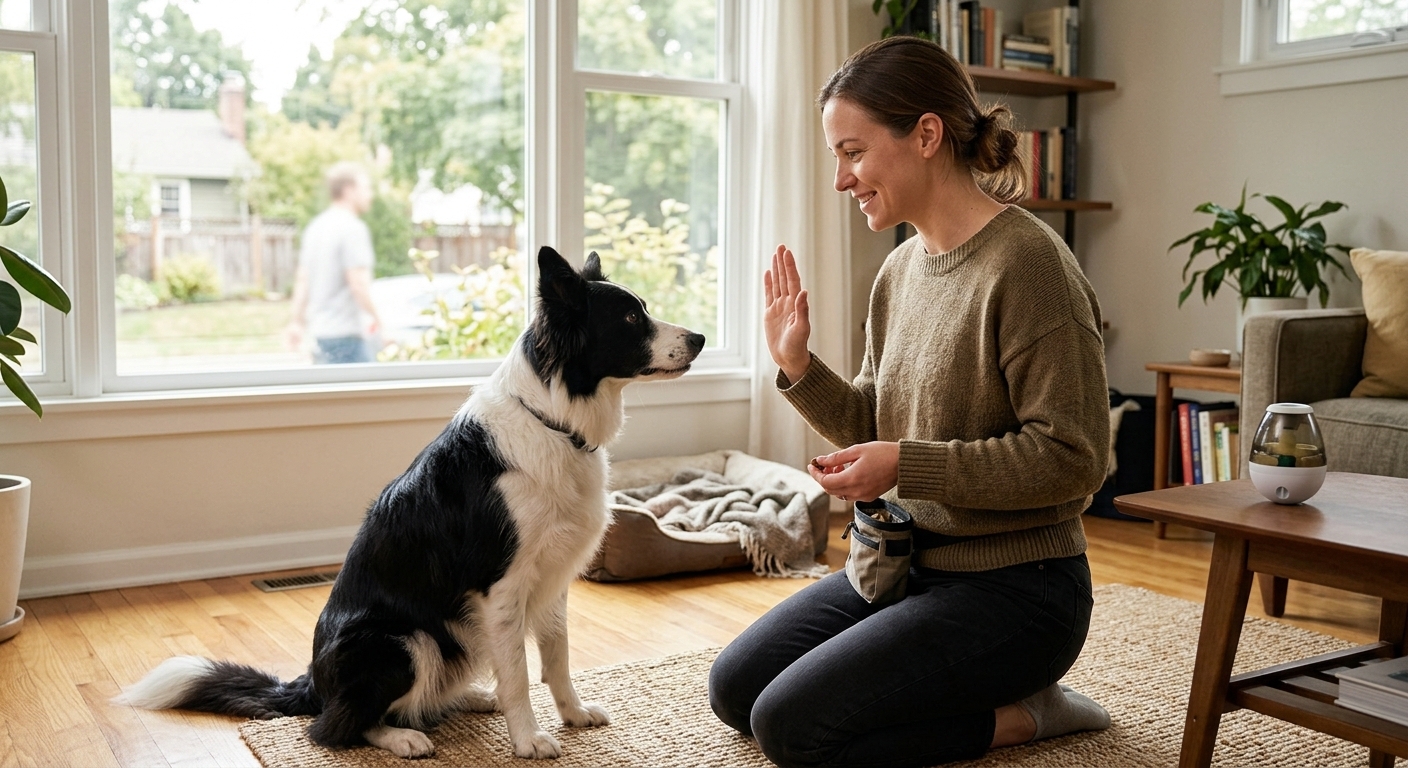
Excessive barking is one of the most frustrating challenges dog owners face. Whether your canine companion barks at every passerby, reacts intensely to the doorbell, or barks incessantly when left alone, finding a humane, effective, and lasting solution is crucial. Many owners struggle to understand why their dogs bark and often resort to methods that only worsen the problem or create anxiety.
If you are wondering how to stop dog barking without using harsh punishments or fear tactics, this comprehensive guide provides positive reinforcement techniques, behavioral strategies, and scientific insights to help you regain peace in your home.
Understanding Why Dogs Bark
Before you can effectively address how to stop dog barking, you must identify the root cause of the behavior. Barking is a natural form of canine communication, not a flaw to be eliminated entirely. Dogs vocalize to convey emotions, needs, and reactions to their environment.
+-------------------+-------------------------------------------------------------+
| Type of Barking   | Common Triggers & Symptoms                                  |
+-------------------+-------------------------------------------------------------+
| Territorial       | Barking at visitors, mail carriers, or people outside       |
| Alarm / Fear      | Sudden noises, unfamiliar objects, or sudden movements      |
| Attention-Seeking | Barking directly at owners for food, play, or affection     |
| Boredom           | Repetitive, monotonous barking when left isolated           |
| Separation Anxiety| Distress barking accompanied by pacing, chewing, or whining |
+-------------------+-------------------------------------------------------------+
1. Territorial and Alert Barking
Territorial barking occurs when a dog perceives a person, animal, or object approaching their designated space—such as your yard, living room, or car. The bark is typically loud, assertive, and accompanied by alert posture.
2. Fear and Alarm Barking
Dogs bark when startled by unfamiliar sounds, sudden movements, or strange objects. Unlike territorial barking, fear barking can happen anywhere, regardless of whether the dog is on their home turf.
3. Attention-Seeking Barking
When a dog barks directly at you while making eye contact, they are often demanding attention, food, treats, or access to the outdoors. If you give in—even by scolding them—you inadvertently reward and reinforce the behavior.
4. Boredom and Loneliness Barking
Dogs are social, intelligent animals. When left alone for extended periods without adequate mental or physical stimulation, they often turn to barking as a coping mechanism to release pent-up energy.
5. Separation Anxiety
Separation-related barking is accompanied by signs of distress such as pacing, destructive chewing, panting, and inappropriate elimination. This type of barking requires a specialized approach focused on reducing anxiety rather than simple obedience training.
🧠 Unlock Your Dog’s Full Potential
Standard obedience training often addresses surface symptoms without targeting the underlying cause: your dog’s cognitive engagement. If you are struggling with persistent vocalization, check out Brain Training for Dogs. This force-free program uses science-backed brain games to eliminate unwanted behaviors like excessive barking by stimulating your dog’s mind and building lifelong focus.
Proven Strategies on How to Stop Dog Barking
Addressing canine vocalization requires consistency, patience, and positive reinforcement. Below are evidence-based techniques designed to address the root causes of excessive barking.
                +---------------------------------+
                |   EVALUATE THE BARKING TRIGGER  |
                +---------------------------------+
                                |
        +-----------------------+-----------------------+
        |                                               |
[Visual/Environmental]                      [Internal/Emotional]
        |                                               |
  Reduce Triggers                               Desensitization &
 (Blinds, Film, Rest)                            Counter-Conditioning
        |                                               |
        +-----------------------+-----------------------+
                                |
                +---------------------------------+
                |   REPLACE WITH ALTERNATIVE      |
                |          BEHAVIOR               |
                +---------------------------------+
Strategy 1: Environmental Management and Trigger Reduction
The fastest way to reduce nuisance barking is to control your dog’s environment so they cannot practice the unwanted behavior.
-
Block Visual Triggers: Use window film or close blinds to prevent your dog from seeing pedestrians, cars, or cats outside.
-
Manage Outdoor Access: Avoid leaving your dog unsupervised in the yard if they consistently bark at fence lines or passersby.
-
Background Noise: Play white noise, classical music, or keep the television on to mask sudden outside sounds that trigger alarm barking.
Strategy 2: Differential Reinforcement of Alternative Behaviors (DRA)
One of the most effective methods when learning how to stop dog barking is teaching your dog an incompatible behavior—something they cannot physically do while barking.
-
Select a Replacement Behavior: Teach your dog to go to their mat or fetch a specific toy when the doorbell rings.
-
Reward Success: Practice this behavior repeatedly using high-value rewards when there are no distractions.
-
Introduce Triggers Slowly: Gradually introduce the trigger (e.g., knocking on a wall) at low intensity, rewarding your dog instantly for choosing the alternative behavior instead of barking.
Strategy 3: Desensitization and Counter-Conditioning
This method changes your dog’s emotional response to a trigger from negative or reactive to positive and calm.
-
Desensitization: Expose your dog to the trigger at a distance or volume so low that it does not elicit barking.
-
Counter-Conditioning: Pair the low-level trigger with a high-value treat. Over time, your dog learns to associate the sound or sight with positive rewards rather than threat or excitement.
Step-by-Step Guide to Teaching the “Quiet” Command
Teaching a clear verbal cue like “Quiet” provides a structured way to manage unexpected barking episodes.
Step 1: Allow 1-2 Barks  --->  Step 2: Show High-Value Treat
                                           |
Step 4: Reward & Release <---  Step 3: Say "Quiet" When Silent
-
Allow a Couple of Barks: Let your dog bark once or twice to acknowledge the trigger (such as someone walking by).
-
Get Their Attention: Hold up a smell-rich treat (such as chicken or cheese) near their nose. Most dogs will stop barking to sniff the treat.
-
Issue the Cue: Once your dog stops barking to sniff, say “Quiet” in a calm, neutral voice.
-
Reward the Silence: Wait 2–3 seconds of silence, then give them the treat and praise them warmly.
-
Build Duration: Gradually increase the time your dog must remain quiet before receiving the treat (from 3 seconds up to 30 seconds or more).
Note: Avoid shouting “Quiet!” at your dog. Shouting is often interpreted as barking along, which escalates excitement rather than calming the situation.
Common Mistakes to Avoid
When researching how to stop dog barking, it is equally important to know what not to do. Mistakes in training can inadvertently reward barking or increase your dog’s anxiety.
+-------------------------------+----------------------------------------------------+
| Common Mistake                | Why It Backfires                                   |
+-------------------------------+----------------------------------------------------+
| Yelling at your dog           | Perceived as joining in the barking chorus         |
| Giving treats while barking   | Directly rewards and reinforces the noise          |
| Inconsistent rules            | Confuses the dog and slows down training progress   |
| Using harsh punishment        | Increases fear and anxiety, worsening root causes  |
+-------------------------------+----------------------------------------------------+
1. Yelling or Raising Your Voice
When you yell at a barking dog, they usually assume you are joining in the vocalization. Speak in a calm, confident, and low-pitched voice.
2. Giving Attention for Demand Barking
If your dog barks at you for food, games, or affection, looking at them, talking to them, or letting them out immediately reinforces the habit. Practice the “ignore technique”: turn your back, cross your arms, and completely withhold attention until they are completely quiet.
3. Relying on Aversive Anti-Bark Collars
Shock, spray, or ultrasonic collars may suppress barking temporarily through discomfort or fear, but they fail to address the underlying emotional trigger. In many cases, aversive tools increase distress and lead to displaced behaviors such as aggression or destructive chewing.
🐕 Discover a Smarter Approach to Dog Training
Rooting out stubborn barking requires addressing your dog’s core intelligence and mental energy. Traditional training methods often fall short because they fail to engage a dog’s cognitive capacity. To transform your dog’s behavior using gentle, intelligent techniques, explore Brain Training for Dogs. Developed by a certified professional trainer, this program turns obedience into fun, engaging mental challenges.
Mental Stimulation and Exercise: The Hidden Solution
A tired dog is a quiet dog. A significant proportion of excessive barking stems from boredom and unspent physical or mental energy.
Physical Exercise Requirements
Ensure your dog receives daily physical exercise tailored to their breed, age, and health status:
-
High-Energy Breeds (Border Collies, Shepherds): 60–90 minutes of vigorous activity daily (fetch, running, agility).
-
Moderate-Energy Breeds (Retrievers, Spaniels): 45–60 minutes of walking, outdoor exploration, and play.
-
Low-Energy Breeds (Basset Hounds, Bulldogs): 20–30 minutes of gentle walks and sniffing games.
Mental Enrichment Activities
Mental exercise exhausts a dog far more efficiently than physical movement alone. Incorporate these daily enrichment tools:
-
Puzzle Toys & Food Dispensers: Serve meals in KONGs, snuffle mats, or puzzle boards to force your dog to work for their food.
-
Sniffari Walks: Allow your dog extra time on walks to sniff their surroundings freely, which lowers heart rates and releases calming endorphins.
-
Basic Obedience Refresher: 5 to 10 minutes of daily trick training keeps your dog’s brain engaged and focused on learning.
Frequently Asked Questions (FAQ)
How long does it take to stop a dog from barking?
Training timelines vary depending on how long the behavior has persisted, the dog’s age, and training consistency. With daily practice and proper management, initial improvements are often visible within 1 to 3 weeks.
Should I ignore my dog when they bark?
Ignore your dog only if the barking is attention-seeking (demand barking). If the barking is triggered by fear, alarm, or territorial instincts, ignoring it will not solve the issue; environmental management and counter-conditioning are required.
Can old dogs learn how to stop barking?
Yes. Dogs of any age can learn new habits through positive reinforcement and cognitive stimulation. Consistency and patience are key regardless of age.
Conclusion: Achieving Long-Term Peace and Calm
Learning how to stop dog barking requires identifying the root cause, managing the environment, applying positive reinforcement, and ensuring your dog receives sufficient physical and mental enrichment. By replacing fear and frustration with clear communication and engaging training games, you build a quieter home and a stronger bond with your canine companion.
🐾 Transform Your Dog’s Behavior Today
Ready to eliminate nuisance barking and build an incredible bond with your dog? Don’t let excessive noise ruin your peace of mind. Check out Brain Training for Dogs today to access step-by-step video guides, cognitive exercises, and expert strategies that solve problem behaviors naturally and effectively!