A healthy, confident smile is often considered one of a person’s greatest aesthetic assets. Beyond aesthetics, however, your mouth serves as the primary gateway to your overall physiological well-being. While many individuals dedicate significant time and money to whitening their teeth, they frequently overlook the critical foundation holding those teeth in place: the gums.
When your gum tissue begins to pull back from the surfaces of your teeth, exposing the delicate roots underneath, you are experiencing a condition known as gum recession. Left unmanaged, receding gums can lead to extreme tooth sensitivity, structural decay, severe infections, and ultimately, permanent tooth loss.
Understanding the underlying mechanics of receding gum disease, recognizing its early warning signs, and exploring both clinical interventions and daily preventive routines can help you preserve your smile for a lifetime.
What Is Receding Gum Disease?
Gum recession (medically referred to as gingival recession) is a process in which the margin of the gum tissue surrounding the teeth wears away or pulls back, exposing more of the tooth structure or even the tooth’s root.
Under normal, healthy conditions, your tooth enamel protects the visible crown of the tooth, while pink, firm gum tissue shields the root structure, periodontal ligament, and supporting jawbone. When gum disease or mechanical trauma causes this pink barrier to recede, tiny gaps or “pockets” form between the teeth and the gumline.
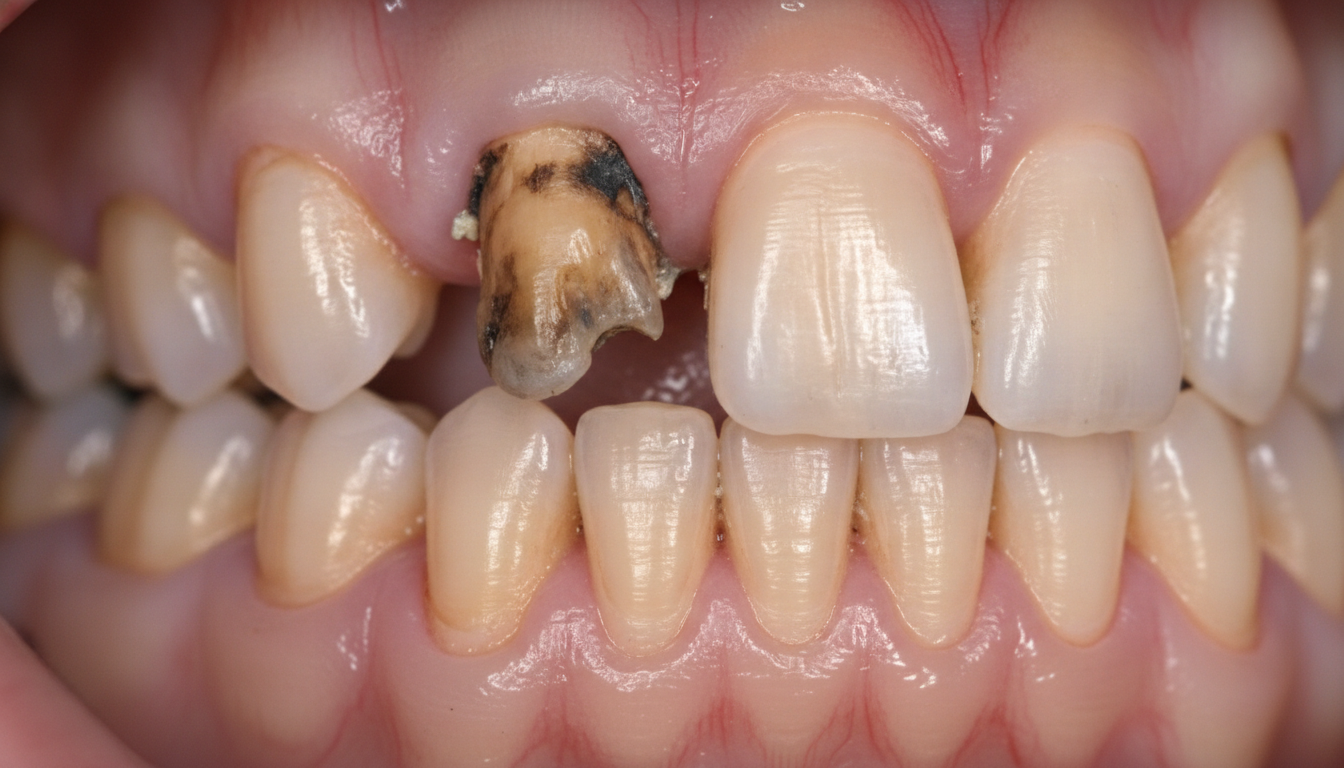
These pockets create an ideal environment for harmful bacteria to colonize. Because the root surfaces beneath the gumline are covered in a softer substance called cementum rather than hard enamel, exposed roots are exceptionally vulnerable to rapid decay, structural breakdown, and severe nerve inflammation.
The Subtle Symptoms of Gum Recession
One of the most dangerous aspects of receding gums is that the process typically occurs gradually. Many people fail to notice the problem until it has reached an advanced stage. However, paying close attention to minor changes in your mouth can help you catch the condition early.
Common symptoms include:
- Elevated Tooth Sensitivity: Feeling a sudden, sharp pain when consuming hot, cold, sweet, or acidic foods and drinks is often the first recognizable sign of root exposure.
- Visibly “Longer” Teeth: As the gumline retreats, teeth appear visibly longer than they used to be.
- Notches at the Gumline: You may feel a tiny ridge, notch, or dent near the base of your tooth where the soft tissue meets the tooth root.
- Persistent Bleeding Gums: Experiencing pink in the sink after brushing or flossing is a major red flag indicating active inflammation or early-stage gingivitis.
- Red, Swollen, or Tender Gums: Healthy gums are firm and light pink. Redness, puffiness, or softness indicates underlying bacterial invasion.
- Chronic Bad Breath (Halitosis): Persistent bad breath that does not dissipate after brushing is often caused by sulfur compounds released by anaerobic bacteria trapped inside deep periodontal pockets.
- Loose or Shifting Teeth: In severe cases, the destruction of supporting bone and soft tissue causes teeth to become unstable.
Major Causes of Receding Gum Disease
To effectively fight against receding gum disease, you must first identify the root factors causing the tissue loss. Gum recession is rarely caused by a single isolated issue; rather, it is usually the result of a combination of behavioral, biological, and environmental factors.
   +-------------------------------------------------------+

   |             PRIMARY CAUSES OF GUM RECESSION           |

   +-------------------------------------------------------+

                               |

    +--------------------------+--------------------------+

    |                                                     |
[ BIOLOGICAL & INFLAMMATORY ] [ MECHANICAL & LIFESTYLE ]
• Periodontal Disease (Gingivitis) • Aggressive Tooth Brushing
• Genetic Predisposition • Tobacco & Nicotine Use
• Hormonal Fluctuations • Bruxism (Teeth Grinding)
• Misaligned Tooth Position • Oral Piercings & Trauma
1. Periodontal Disease (Gingivitis and Periodontitis)
Bacterial infection is the single most common cause of gum recession. When food particles combine with saliva, they form a sticky layer called plaque buildup. If plaque is not removed daily through meticulous oral hygiene, it hardens into a substance called tartar (calculus).
Tartar cannot be brushed away at home and acts as a reservoir for harmful bacteria. These pathogens produce toxins that trigger chronic inflammation, damaging the gum tissue, breaking down the attachment fibers, and eroding the supporting jawbone. This progression transforms mild gingivitis into destructive periodontitis.
2. Overly Aggressive Brushing
Ironically, being too enthusiastic about your dental hygiene can sometimes backfire. Brushing your teeth with a hard-bristled toothbrush or using excessive pressure—often termed “toothbrush abrasion”—can physically strip away the thin margin of delicate gum tissue, particularly on the outer surfaces of the front teeth.
3. Inadequate Oral Hygiene Maintenance
While aggressive brushing causes mechanical damage, under-brushing or failing to floss daily leads to massive bacterial growth. Infrequent oral care allows tartar to accumulate, irritating the tissue and triggering inflammatory breakdown.
To help protect your gums from inflammatory breakdown and support overall oral immunity, incorporating a targeted nutrient regimen like this advanced tooth and gum health support supplement into your daily routine can help keep destructive oral bacteria in check while reinforcing firm tissue strength.
4. Genetics and Inherited Anatomy
Some individuals are simply genetically predisposed to gum problems. Studies show that up to 30% of the population may be naturally susceptible to gum disease, regardless of how thoroughly they care for their teeth. Furthermore, some people inherit thin, fragile gum tissue (a thin periodontal phenotype) that recedes far more easily under mild pressure compared to thicker tissue types.
5. Hormonal Changes
Fluctuations in estrogen and progesterone levels during puberty, pregnancy, oral contraceptive use, and menopause can make the gums significantly more sensitive, hyper-reactive to plaque, and prone to recession.
6. Tobacco Use
Smokers and users of smokeless tobacco products are substantially more likely to develop advanced receding gums. Tobacco restricts micro-vascular blood flow to the gingival tissues, impairing their ability to fight off bacterial infection and repair minor everyday injuries.
7. Bruxism (Teeth Grinding and Clenching)
Unconscious grinding or clenching of the teeth, especially during sleep, exerts tremendous lateral force on the tooth roots and alveolar bone. Over time, these excessive mechanical stresses cause microscopic fractures in the enamel near the gumline (abfraction lesions) and cause the surrounding gum attachment to weaken and recede.
8. Misaligned Teeth or Malocclusion
When teeth are crooked or do not fit together properly, uneven pressure is placed on specific areas of the jaw during chewing. The teeth taking the brunt of these uneven forces often suffer from accelerated tissue loss and tissue thinning.
How Dentists Diagnose Receding Gums
If you suspect your gumline is moving backward, scheduling a professional evaluation with a general dentist or a periodontist (a specialized gum doctor) is essential.
During an examination, the clinician will:
- Measure Periodontal Pocket Depths: Using a tiny, calibrated instrument called a periodontal probe, the dentist gently measures the space between your teeth and gums. Healthy pockets measure between 1 and 3 millimeters. Pockets deeper than 4 millimeters signal active periodontitis and tissue attachment loss.
- Assess Clinical Attachment Loss (CAL): The clinician will measure the distance from the enamel-root boundary down to the base of the gum pocket to calculate total tissue loss.
- Check for Mobility and Bone Loss: X-rays are taken to evaluate the height of the jawbone supporting the teeth and to look for hidden pockets of tartar.
Clinical Treatments for Receding Gum Disease
Treatment strategies for receding gum disease depend largely on the underlying cause and the severity of the damage. Once lost, gum tissue does not naturally regenerate on its own like skin or bone. Therefore, medical interventions focus on stopping ongoing damage, repairing structural deficits, and replacing missing tissue through surgical means when necessary.
+————————————————————————-+
| GUM RECESSION TREATMENT OPTIONS |
+————————————————————————-+
|
+—————————+—————————+
| |
[ NON-SURGICAL THERAPIES ] [ SURGICAL PROCEDURES ]
• Scaling and Root Planing • Connective Tissue Grafts
• Antimicrobial Rinses & Gel • Free Gingival Grafts
• Desensitizing Treatments • Pinhole Surgical Technique
• Orthodontic Realignment • Guided Tissue Regeneration
Non-Surgical Treatments
For mild to moderate cases of recession caused by early-stage bacterial infections, non-invasive procedures are usually the first line of defense.
- Deep Cleaning (Scaling and Root Planing): This detailed, two-step medical cleaning goes deep beneath the visible gumline. First, scaling removes stubborn plaque and hardened tartar from both above and below the tissue margin. Next, root planing smooths out rough spots on the tooth roots, making it difficult for new bacteria to adhere while providing a clean surface for the gums to reattach.
- Local Antibiotics and Antimicrobial Rinses: Following a deep cleaning, your dentist may apply targeted antibiotic gels directly into deep pockets or prescribe specialized antimicrobial mouthwashes to eradicate lingering bacteria.
- Desensitizing Varnish and Composite Resins: If sensitivity is your primary issue, applying desensitizing agents or tooth-colored composite resins over exposed roots can block open dentinal tubules, reducing sensitivity to hot and cold temperatures.
Surgical Treatments
When severe receding gums jeopardize the survival of a tooth, or when roots are widely exposed causing pain and aesthetic distress, surgical restoration becomes necessary.
1. Soft Tissue Grafting
Gum graft surgery is the traditional, proven gold standard for replacing lost gum tissue. A periodontist takes tissue from another area of your mouth (or uses processed donor tissue) and carefully attaches it to the affected region.
- Connective Tissue Graft: The most common grafting technique. A tiny flap is created on the roof of your mouth (palate), and a piece of underlying subepithelial connective tissue is removed. This tissue is then stitched securely over the exposed root surface to build back lost volume.
- Free Gingival Graft: Direct surface tissue is removed from the palate and transplanted to areas where the gums are exceptionally thin and need extra structural reinforcement.
- Pedicle Graft: If you have plenty of healthy gum tissue immediately adjacent to the receding tooth, a partial flap (pedicle) is cut from nearby tissue, pulled sideways to cover the root, and stitched into place.
2. Pinhole Surgical Technique (PST)
The Pinhole Surgical Technique is a minimally invasive alternative to traditional tissue grafting. A surgeon uses a tiny needle to create a small hole in the existing gum tissue above the exposed root. Using specialized tools, the doctor gently loosens the existing gum tissue and glides it down to cover the root. Collagen strips are then inserted into the pinhole to stabilize the tissue while it heals, eliminating the need for scalpels or palatal incisions.
3. Guided Tissue Regeneration (GTR)
In cases where underlying jawbone has been destroyed along with soft tissue, a periodontist may perform regenerative surgery. The damaged tissue is cleaned out, and a bio-compatible membrane, bone graft material, or tissue-stimulating proteins are placed under the gums to encourage your body to naturally rebuild lost bone and ligament tissue.
Daily Home Care and Preventive Strategies
While advanced medical therapies can repair severe damage, day-to-day care remains your primary shield against future tissue loss. Establishing a thorough, gentle daily routine is fundamental for long-term periodontal health.
1. Adopt the Proper Brushing Technique
- Use Soft-Bristled Brushes: Always opt for soft or extra-soft toothbrushes. Medium and hard bristles wear away delicate gum tissue.
- Brush at a 45-Degree Angle: Angle your brush bristles gently toward the line where your teeth meet your gums. Move the brush in light, circular motions rather than sawing back and forth horizontally.
- Consider an Electric Toothbrush: Modern sonic electric toothbrushes often feature built-in pressure sensors that vibrate or pause if you press down too hard, protecting your gums from physical stress.
2. Floss Correctly and Daily
Flossing removes dangerous bacterial plaque from areas a toothbrush simply cannot reach. Slide the floss gently between your teeth, curve it into a “C” shape around each tooth, and slide it up and down beneath the gum margin. Avoid snapping the floss forcefully against your gums.
3. Tackle Nighttime Teeth Grinding
If you wake up with a sore jaw, headache, or neck tension, you may be grinding your teeth at night. Ask your dentist about custom-fitted nightguards (occlusal splints) to cushion your teeth and prevent heavy biting forces from causing tissue recession.
4. Optimize Your Internal Nutritional Support
Maintaining resilient gum tissue requires adequate internal nourishment. Essential nutrients like Vitamin C, Zinc, and potent bioflavonoids help lower tissue inflammation, support cellular repair, and enhance collagen production.
To give your body targeted internal resources to fight back against inflammatory decay, consider supplementing with this specialized daily oral health formula. Taking proactive steps to feed your gums essential micro-nutrients creates an environment where harmful oral pathogens struggle to thrive.
+————————————————————————–+
| DAILY GUM PROTECTION CHECKLIST |
+————————————————————————–+
| [✓] Soft-bristled or pressure-sensing electric toothbrush |
| [✓] Gentle, circular brushing motion (no harsh scrubbing) |
| [✓] Daily flossing or interdental brush cleaning |
| [✓] Alcohol-free antimicrobial or natural mouth rinses |
| [✓] Wearing a custom nightguard if suffering from bruxism |
| [✓] Nutritional support to feed cellular repair and gum integrity |
| [✓] Biannual professional dental cleanings and evaluations |
+————————————————————————–+
Common Myths About Receding Gums
Myth 1: “Gums naturally regrow if you just keep them super clean.”
Fact: Once gingival tissue and supporting alveolar bone are destroyed by periodontitis or trauma, they do not spontaneously regenerate on their own. While excellent home care stops further tissue loss, physical restoration requires clinical treatments like grafts, pinhole procedures, or targeted collagen support.
Myth 2: “Receding gums are just an unavoidable part of getting older.”
Fact: While tissue thickness changes slightly over time, extensive gum recession is a pathological process driven by bacteria, mechanical damage, or bite imbalance—not an inevitable consequence of aging.
Myth 3: “If my gums aren’t bleeding, I don’t have gum disease.”
Fact: Bleeding is a common warning sign of gingivitis, but advanced conditions do not always bleed visibly. Nicotine, for instance, constricts blood vessels, masking bleeding even in smokers with severe underlying periodontitis. Regular professional checkups are necessary to detect silent issues.
Taking Control of Your Dental Health Today
Receding gum disease is a slow-moving, progressive threat that can jeopardize your smile, compromise your bite, and impacting your overall health. However, tissue loss is neither inevitable nor untreatable.
By catching the signs early, modifying your brushing technique, stopping tobacco use, visiting your dentist regularly for professional deep cleanings, and utilizing proven solutions like this targeted tooth and gum support supplement to nourish your mouth from within, you can stop receding gums in their tracks. Take proactive control of your daily routine today, protect the structural foundation of your teeth, and enjoy a healthy, confident smile for decades to come.