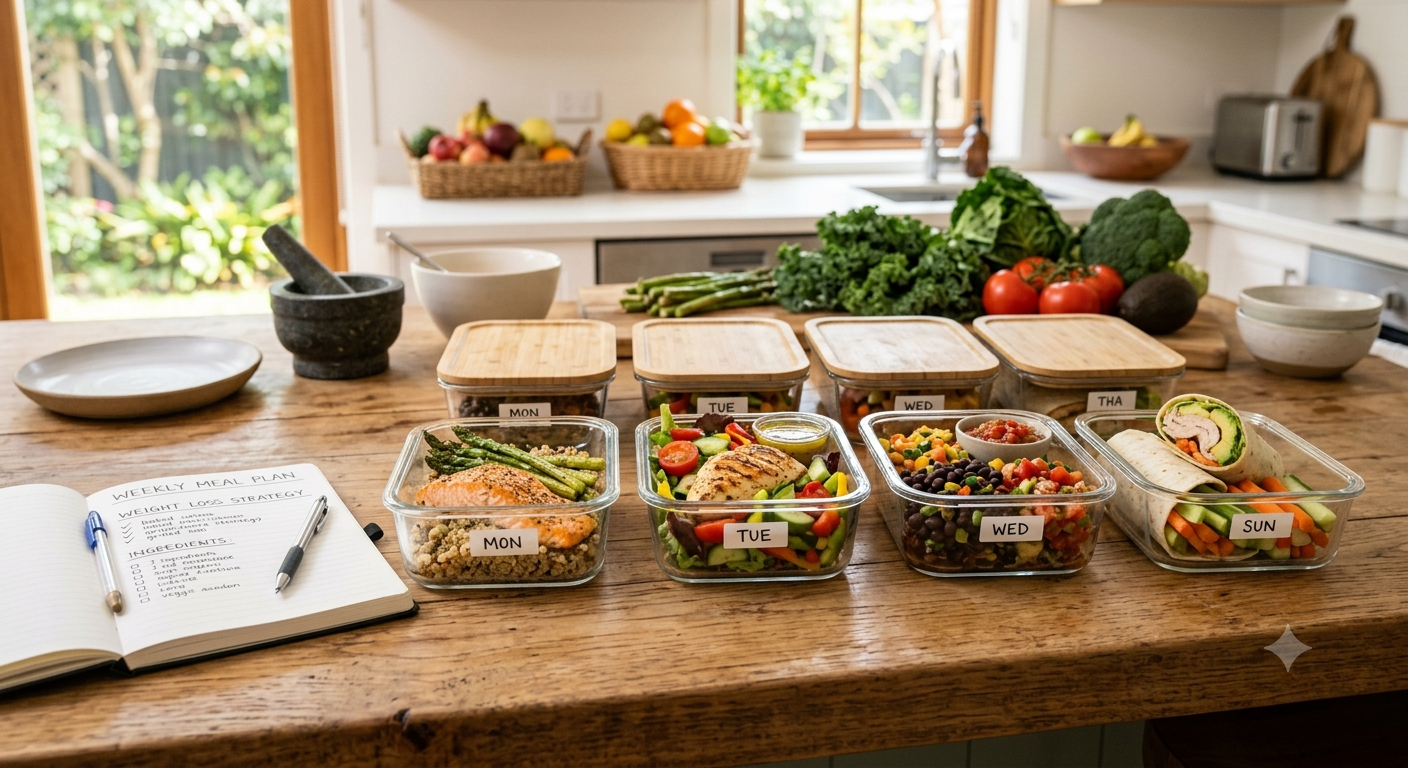
Losing weight often feels like an uphill battle dominated by confusing advice, restrictive diets, and constant hunger. If you are tired of guessing what to eat every single day, adopting a structured meal plan for weight loss is the single most effective step you can take to regain control of your health, simplify your routine, and burn fat consistently.
The secret to long-term success isn’t starving yourself; it is creating a balanced, repeatable routine that fuels your metabolism while maintaining a healthy, continuous caloric deficit. In this comprehensive guide, we will break down the exact science behind effective nutritional planning, show you how to structure your daily eating habits, provide a complete 7-day template, and reveal how you can achieve your goals without giving up delicious food.
If you want to skip the trial-and-error and fast-track your results with a fully customized strategy tailored to your exact body type, lifestyle, and preferences, you can get started today with a proven dietary system.
Why Following a Structured Meal Plan Works for Weight Loss
Many people assume that losing weight is simply a matter of “eating less and moving more.” While energy balance is fundamental, willpower alone is rarely enough to sustain long-term progress. When life gets busy, fatigue sets in, leading to impulsive food choices, late-night takeout orders, and ruined fitness goals.
A structured routine fixes this fundamental problem by removing decision fatigue. Here is why planning your menu in advance transforms your journey:
- Eliminates Mindless Snacking: Knowing exactly what and when you are going to eat reduces the temptation to grab high-calorie, processed snacks.
- Ensures Consistent Portion Control: Pre-portioned meals make it easy to maintain a precise calorie deficit for fat loss without needing to calculate every morsel on the fly.
- Stabilizes Blood Sugar Levels: Balanced meals rich in protein and fiber prevent sudden spikes and crashes in blood sugar, curbing intense sugar cravings.
- Saves Time and Money: Grocery shopping with a plan prevents food waste, curbs impulse purchases, and slashes weekly grocery bills.
- Builds Long-Term Healthy Habits: Repeating healthy choices reinforces positive behaviors until eating well becomes second nature.
Understanding the Basics: Calories, Macros, and Satiety
Before diving into recipe ideas, it is essential to understand the core principles that make a weight loss meal plan effective. No matter what trend or diet popular culture promotes, weight loss fundamentally comes down to three key pillars: energy intake, macronutrient balance, and food quality.
1. Creating a Sustainable Caloric Deficit
To lose fat, your body must expend more energy than it receives from food. A safe and effective rate of fat loss is roughly 1 to 2 pounds per week. To achieve this, most individuals need a daily deficit of 300 to 500 calories below their Total Daily Energy Expenditure (TDEE). Severe caloric restriction should be avoided, as it slows down your resting metabolic rate, triggers muscle loss, and leads to intense physical hunger.
2. The Essential Macronutrient Triad
Calories dictate how much weight you lose, but macronutrients (protein, carbohydrates, and fats) dictate whether you lose body fat or lean muscle. A well-rounded healthy eating plan prioritizes all three:
- Lean Protein: Protein is the most critical nutrient for fat loss. It offers high thermic effect of food (TEF), meaning your body burns more calories digesting it compared to fats or carbs. Protein preserves lean muscle mass and stimulates fullness hormones like peptide YY and GLP-1. Aim for sources like chicken breast, turkey, eggs, fish, tofu, and Greek yogurt.
- High-Fiber Carbohydrates: Carbs are not your enemy. Complex carbohydrates digest slowly, providing a steady stream of physical energy without rapid insulin spikes. Prioritize high-fiber options like oats, quinoa, brown rice, sweet potatoes, and fresh berries.
- Healthy Fats: Essential fatty acids support hormone production, neurological function, and the absorption of fat-soluble vitamins (A, D, E, K). Focus on controlled portions of extra virgin olive oil, avocados, raw nuts, chia seeds, and wild-caught salmon.
3. Food Volume and Micronutrients
Hunger is the primary reason most diets fail. To stay full while eating fewer calories, your daily menu should focus on nutrient-dense foods with low calorie density. Non-starchy vegetables like spinach, broccoli, cucumbers, bell peppers, and zucchini fill up your stomach physically with fiber and water, signaling to your brain that you are full without overloading your day with extra energy.
How to Customize Your Meal Plan Step-by-Step
There is no single “magic” diet that works identically for everyone. A successful system must match your daily schedule, dietary preferences, and metabolic needs. Follow this straightforward process to build a plan that fits your life seamlessly.
Step 1: Calculate Your Energy Needs
Estimate your TDEE using an online calculator based on your age, sex, weight, height, and activity level. Subtract 15% to 20% from that number to set your daily calorie target for weight loss.
Step 2: Set Your Protein Goal
Aim for approximately 0.7 to 1.0 grams of protein per pound of target body weight. Spread this total evenly across your planned meals (typically 25 to 40 grams of lean protein per serving).
Step 3: Fill in Fibrous Vegetables and Healthy Carbs
Structure your lunch and dinner plates using the “Plate Method”: make half your plate non-starchy vegetables, one-quarter lean protein, and one-quarter complex carbohydrates, finished with a small serving of healthy fats.
Step 4: Prepare for Cravings
Factor in 100-to-200-calorie snacks rich in protein and fiber to manage mid-afternoon energy slumps. Pre-planning your snacks stops you from reaching for processed treats.
If you prefer a hassle-free approach that calculates your macros, generates weekly shopping lists, and automatically tailors recipes to your taste buds, you can check out this solution to take the work out of your hands.
Comprehensive 7-Day Sample Meal Plan for Fat Loss
This sample 7-day fat loss meal prep template is designed to deliver roughly 1,500 to 1,700 calories per day with an emphasis on high protein, high fiber, and satisfying whole foods. Adjust portion sizes up or down depending on your personal calorie targets.
Day 1: Monday
- Breakfast: Protein Oatmeal – 1/2 cup rolled oats cooked in almond milk, mixed with 1 scoop of whey or plant protein, topped with 1/2 cup fresh blueberries and 1 tablespoon of chia seeds.
- Lunch: Grilled Chicken Salad – 5 oz sliced chicken breast over 3 cups of mixed greens, cherry tomatoes, cucumbers, 1/4 avocado, and 1 tablespoon of light olive oil dressing.
- Dinner: Baked Salmon & Greens – 5 oz wild salmon fillet baked with lemon and herbs, served alongside 1 cup of steamed broccoli and 1/2 cup of cooked quinoa.
- Snack: 1 cup of plain, low-fat Greek yogurt mixed with a dash of cinnamon.
Day 2: Tuesday
- Breakfast: Veggie Egg Scramble – 2 whole eggs and 2 egg whites scrambled with spinach, bell peppers, and onions, served on 1 slice of whole-grain sprouted toast.
- Lunch: Turkey and Avocado Wrap – 4 oz sliced lean turkey breast, lettuce, tomato, and 2 tablespoons of guacamole wrapped in a high-fiber, low-carb whole-wheat tortilla.
- Dinner: Tofu or Chicken Stir-Fry – 5 oz extra-firm tofu or chicken strips sautéed with mixed bell peppers, snap peas, and broccoli in a low-sodium soy sauce over 1/2 cup of brown rice.
- Snack: 1 medium apple with 1 tablespoon of natural peanut butter.
Day 3: Wednesday
- Breakfast: Berry Protein Smoothie – 1 scoop of protein powder blended with 1 cup of spinach, 1/2 frozen banana, 1/2 cup frozen strawberries, and 1 cup of unsweetened almond milk.
- Lunch: Southwestern Black Bean & Chicken Bowl – 4 oz shredded chicken breast, 1/2 cup black beans, 1/4 cup corn, salsa, and mixed greens with a sprinkle of low-fat cheese.
- Dinner: Lean Beef Stir-Fry – 4 oz extra-lean ground beef cooked with diced tomatoes, onions, and zucchini, served over sweet potato mash.
- Snack: 1 hard-boiled egg with a pinch of sea salt and pepper.
Day 4: Thursday
- Breakfast: Overnight Chia Seed Pudding – 3 tablespoons chia seeds soaked overnight in 1 cup unsweetened almond milk, topped with 1/2 cup fresh raspberries and sliced almonds.
- Lunch: Tuna Salad Greens – 1 can of light tuna packed in water, drained and mixed with 1 tablespoon of light mayo or Greek yogurt, served over a bed of spinach with whole-grain crackers.
- Dinner: Lemon Herb Cod – 6 oz baked white cod, 1 cup of roasted asparagus, and 1/2 cup of roasted sweet potato cubes.
- Snack: 1/4 cup of raw pumpkin seeds or almonds.
Day 5: Friday
- Breakfast: Avocado & Egg Toast – 1 slice of whole-grain toast topped with 1/4 mashed avocado and 2 poached or soft-boiled eggs.
- Lunch: Mediterranean Chickpea Bowl – 1 cup of rinsed chickpeas mixed with diced cucumbers, cherry tomatoes, kalamata olives, 1 oz feta cheese, and lemon vinaigrette.
- Dinner: Turkey Meatballs – 5 oz homemade lean turkey meatballs baked and served over zucchini noodles (zoodles) with 1/2 cup of low-sugar marinara sauce.
- Snack: 1 cup of fresh sliced bell peppers with 3 tablespoons of classic hummus.
Day 6: Saturday
- Breakfast: High-Protein Pancakes – Protein pancake mix cooked according to package directions, topped with a handful of fresh blackberries and a light drizzle of pure maple syrup.
- Lunch: Grilled Shrimp Salad – 5 oz grilled shrimp over arugula, sliced cucumber, radishes, and a light citrus vinaigrette.
- Dinner: Roasted Chicken Thighs – 5 oz skinless, boneless chicken thigh roasted with Brussels sprouts and small red potatoes.
- Snack: 3/4 cup of cottage cheese topped with fresh pineapple chunks.
Day 7: Sunday
- Breakfast: Western Omelet – 2 whole eggs folded with diced ham, bell peppers, and mushrooms, served with a side of mixed berries.
- Lunch: Lentil Vegetable Soup – 1.5 cups of hearty lentil soup paired with a side green salad and a light dressing.
- Dinner: Baked Pork Tenderloin – 5 oz lean pork tenderloin served with roasted cauliflower florets and 1/2 cup cooked wild rice.
- Snack: Dark chocolate (1 square, 85% cocoa) with a small handful of walnuts.
Practical Meal Prep Strategies for Busy Professionals
Having a plan on paper is only half the battle; execution is where real transformations happen. If you don’t have hours to spend cooking every day, adoption of smart meal prep for beginners techniques will save your consistency.
1. Use Batch Cooking: Don’t cook single meals every evening. Set aside two time blocks per week (for example, Sunday afternoon and Wednesday evening) to batch-cook major staples. Roast two sheet pans of mixed vegetables, bake multiple chicken breasts, and boil a large pot of whole grains simultaneously.
2. Invest in Quality Containers: Glass, airtight food containers keep food fresh significantly longer than cheap plastic alternatives. Compartmentalized containers also keep sauces separated from grains, keeping your prepped food appetizing throughout the week.
3. Keep Emergency Staples in Your Pantry: Always stock non-perishable healthy food choices like canned tuna, canned beans, frozen vegetables, microwaveable quinoa pouches, and high-protein powders. When fresh prep runs out, these staples keep you from reaching for unhealthier fast-food options.
4. Spice Up Your Proteins: Eating plain chicken and broccoli leads straight to diet burnout. Utilize zero-calorie or low-calorie seasonings, hot sauces, herbs, vinegars, and garlic to add rich flavor without adding unnecessary fat or sugar calories.
Common Meal Planning Mistakes to Avoid
Even with the best intentions, many individuals fall into predictable traps that stall their progress. Keep an eye out for these frequent mistakes when designing your strategy:
- Over-Restricting Calories Too Early: Cutting calories too drastically causes rapid energy crashes, intense hunger, and loss of muscle tissue. Start with a modest, sustainable deficit.
- Ignoring Liquid Calories: Specialty coffees, sodas, fruit juices, and alcohol contain hidden calories that can quickly erase your hard-earned deficit without filling you up. Stick to water, black coffee, and herbal teas.
- Not Tracking Portion Sizes Accurately: Eyeballing food portions often leads to underestimating calorie intake by several hundred calories per day. Use a digital kitchen scale for a few weeks to calibrate your visual estimates.
- Failing to Plan for Social Events: Sticking to a plan 100% of the time without flexibility is unrealistic. Look up restaurant menus ahead of time and choose protein-focused options so you can enjoy social gatherings without blowing your goals.
Frequently Asked Questions
How many calories should I eat on a meal plan for weight loss?
Caloric needs vary significantly based on age, biological sex, current body composition, and physical activity levels. Generally speaking, most adults aiming for sustainable fat loss thrive on a daily intake ranging between 1,200 to 1,800 calories for women and 1,500 to 2,200 calories for men. Using an online TDEE calculator provides an accurate personalized baseline.
Can I lose weight without exercising if I follow a meal plan?
Yes. Weight loss is primarily driven by nutritional intake and maintaining a caloric deficit. While physical exercise accelerates fat loss, improves cardiovascular health, and preserves lean muscle tissue, proper nutrition accounts for roughly 80% of your body composition changes.
How do I stop feeling hungry while cutting calories?
To combat hunger, optimize your food volume by increasing your intake of dietary fiber and lean protein. High-volume foods like leafy green vegetables, cruciferous veggies, and water-dense fruits fill the stomach physically, while protein slows digestion and promotes long-lasting satiety signals.
Is it necessary to completely cut out carbs to lose weight?
No. Carbohydrates do not directly cause weight gain; surplus calories do. While low-carb diets work well for some individuals, complex carbohydrates provide essential dietary fiber, micronutrients, and vital energy for physical activity. Sustainable fat loss depends on overall calorie balance, not eliminating entire food groups.
Final Thoughts: Transform Your Body with the Right Strategy
A well-structured meal plan for weight loss is far more than a temporary fix—it is the ultimate framework for long-term health, sustainable energy, and effortless weight management. By focusing on high-protein whole foods, high-fiber carbohydrates, non-starchy vegetables, and portion control, you can construct a lifestyle that burns fat without sacrificing enjoyment.
Stop wasting time on extreme crash diets that leave you exhausted and hungry. If you are ready to take complete control of your fitness journey with a tailored, easy-to-follow system designed for lasting results, you can learn more here and launch your personal transformation today.
Disclosure: This article contains affiliate links. We may earn a commission at no extra cost to you if you choose to make a purchase through these links.









